


Walls that stay plumb start with blocks that stay within tolerance
Walls that stay plumb start with blocks that stay within millimetre tolerance. Contractors and project managers in Yaoundé rarely lose time because a brochure sounded convincing. They lose time when the wall leaves the line, when mortar consumption exceeds the bill of quantities, or when a delivery cannot be rejected because the purchase order never stated measurable criteria. The practical question is not what a supplier claims about a 400×150×200 mm hollow block, but what the purchase order requires, what the gate check verifies, and what happens when a pallet fails. Dimensional accuracy is the variable that decides whether a load-bearing residential wall is built once or corrected twice.
Why Yaoundé sites expose weak specifications
In Cameroon, and especially in Yaoundé, material decisions sit between site schedules, cement pricing, and performance once the wall is standing. Teams that treat supply as an afterthought discover too late that tolerance, curing, and logistics decide the programme as much as the architectural plan.
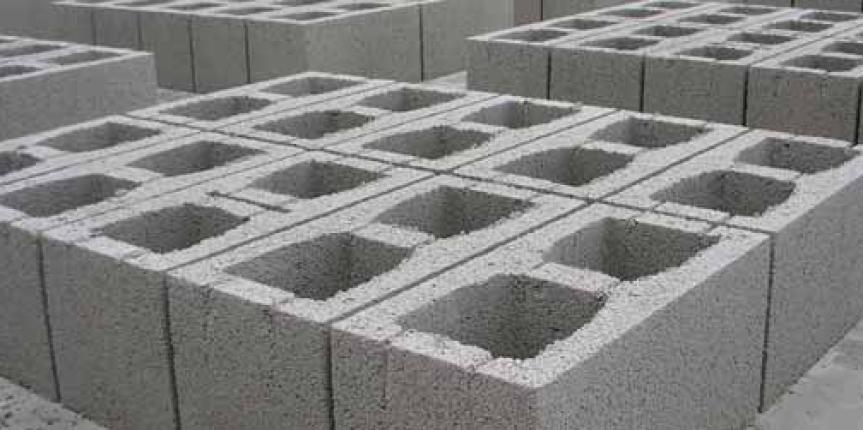
Local conditions compound the problem. High humidity slows the drying of blocks that arrive damp. Labour skill varies across crews and subcontractors. Congested roads in the rainy season stretch delivery windows and increase handling. A lasting dependence on imported clinker feeds directly into bag prices, so every extra kilogram of mortar has a cost that shows up twice: once at the batching point and again in the programme.
A serious specification describes not only the product but minimum cure age, dimensional checks, and rejection conditions at delivery. Without those lines, every dispute becomes a negotiation instead of a measurement.
Rainy-season access changes the economics of breakage and rework. A load that arrives late and already chipped is not “almost good enough” if the crew must rebuild joints the next morning. Spec language that anticipates transport and stacking protects the calendar, not only the compressive class printed on a datasheet.
Evidence that belongs on the purchase order
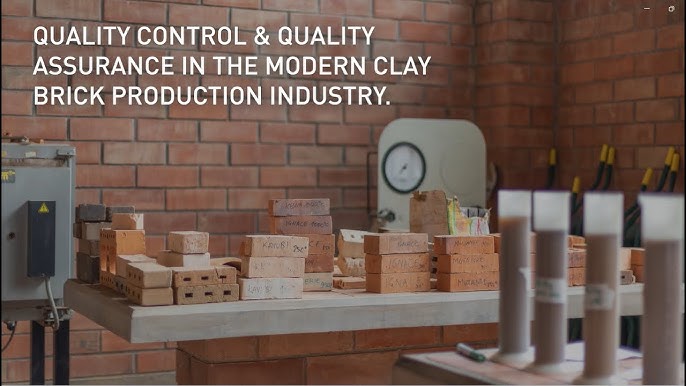
Hydraulic molds can hold dimensional tolerance near ±1 mm when dosing and curing are controlled. That figure is a process capability, not a guarantee on every pallet; it holds only when the plant controls mix water, compaction, and curing time. These points do not replace laboratory testing, but they frame the conversation between client, contractor, and supplier before the first truck arrives. Write them as acceptance criteria, not as marketing adjectives.
Mortar volume rises sharply when block faces are uneven. A bed joint that should be 10–15 mm becomes 25 mm in places where blocks rock on their beds, and the extra mortar is mixed, carried, and paid for on every course. Over a full wall, that overage can consume a meaningful share of the cement budget before any structural work begins.
Whole-cost thinking beats unit-price theatre. Mortar overuse, breakage, and rework often erase the savings from a cheaper block. Ask suppliers to state what happens when a pallet fails dimensional checks—replacement lead time matters as much as the rejection itself. A supplier who cannot answer that question in writing has not thought about the site.
If the project involves NGO or institutional funding, auditors will later ask how quality was controlled at delivery—not whether the site “trusted the supplier”. A short acceptance log (date, truck, sample checks, accepted/rejected, signature) is cheap insurance against both structural risk and paperwork disputes.
Site practice: what crews actually check
A Yaoundé villa crew reported cleaner joint lines after switching to calibrated 400×150×200 hollow blocks. The example is not a universal guarantee; it shows that a written, verifiable requirement changes site behaviour faster than marketing language. Foremen respond to checklists they can enforce at the gate.
Practical rhythm on a disciplined site:
1. Confirm product designation and nominal size against the PO before unloading.
2. Sample dimensions on at least a small random set per load—measure length, width, and height with a tape and check face flatness against a straightedge.
3. Quarantine damaged units instead of “using them somewhere unseen”.
4. Keep batch or production references with the site diary so any later defect can be traced to a delivery.
None of this requires a laboratory van—only a tape, a straightedge, and the will to refuse a bad load.
Labour skill varies. When masons rotate or subcontractors change mid-project, calibrated units and clear joint thickness targets reduce improvisation. Training helps, but geometry that fights the mason guarantees zigzag walls even with experienced hands.
Stacking and curing on site deserve the same seriousness as the plant. Blocks stored in standing water, driven over by vehicles, or laid before they have dried after rain will undo careful purchasing. Nominate a dry storage strip and a single person responsible for release to the masons. That person signs the acceptance log; that signature is what makes the specification enforceable.
Spec language you can copy onto the PO
The question is not messaging—it is what remains measurable after the first rainy season: wall plumb, joint integrity, absence of water-related defects, and a whole-cost view that includes mortar, breakage, and rework.
Minimum lines worth copying onto the purchase order:
- Product designation and nominal dimensions (e.g. 400×150×200 mm hollow block).
- Dimensional tolerance, if claimed, with the measurement method stated.
- Minimum cure or age before delivery.
- Compressive class where relevant to the structural design.
- Visual rejection rules: cracks, broken arrises, contamination, excessive chipping.
- Replacement lead time for rejected pallets.
- Name and role of the person who signs acceptance on site.
Ambiguity favours the weakest load. Specify dimensional tolerance in the purchase order, not only compressive class. Put the requirement on the purchase order, keep batch references, and align site acceptance with the same criteria the plant uses. That is how material quality becomes routine rather than dispute.
Specifying blocks, pavers, or SEB for a Yaoundé site? Browse the NDASI catalogue or message on WhatsApp.